Saturday 31st August, 2013
Led by Dr David Jordon & George Reynolds
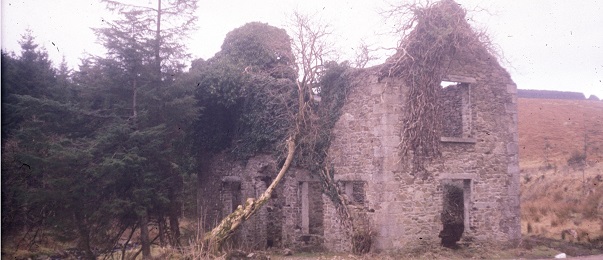
The Cloghleagh iron-manganese deposit was a trial mine - only an adit and a few filled-in trial shafts remain – and it is set apart from Ballycorus lead mines. It is located in the Upper Liffey pluton, a subsidiary to the Leinster batholith which was described by Prof. James Brindley. The mineralisation is hypogenetic, iron and manganese oxides in the matrix of an explosion breccia; the responsible fault plane from which can be seen as well as examples of goethite, a hydrated iron oxide and psilomelane and hollandite (K-Ba varieties of pyrolusite -manganese dioxide). The mine was worked from 1862 to 1868 and parts of a stone crushing wheel which was never assembled can be seen. The fault zone is dated at 12 million years, and claims to be Ireland's "youngest" fault. MEETING PLACE: Car Park @ Cloghleagh church TIME: 10:00 sharp – ~13:00 REGISTRATION: It is necessary to pre-register with Excursions Secretary Dan O’Shea by email, excursions@geology.ie before Thursday 29th August 2013 and all participants must signify they have read our Health and Safety statement (You can read this at http://www.geology.ie/iga-health-and-safety/ or request a copy by e-mail.) View IGA Fieldtrip to Cloghleagh in a larger map This trip will consist of a short 2km forest walk, viewing the Cloghleagh mine and some mineralization before learning about the age of the fault and the exotic nature of the manganese mineralization here. We will view a demonstration of a geophysical instrument which uses very low frequency (VLF) radio waves and some details about a successful Young Scientist project that was conducted over the mine. This VLF receiver can demonstrate how electro-magnetic waves are able to assist in geological and mineral investigation. The water-filled and mineralised fault zone acts like a weak conductor and generates a secondary EM field in response to the primary field from the distant military radio transmitter. The fault zone can be traced by profiles of measurements.
We will then return along the road around lunchtime where you are free to enjoy the surrounding area. We fully encourage you to bring a packed lunch so we can have a picnic and discuss further (weather permitting!) or else we can head to Mooney’s pub nearby provided it is open.
Dr. David Jordan will join us on this trip. His PhD at Trinity College Dublin concentrated on the type on the unusual mineralization witnessed here, the only other example of which is observed in Argentina. George Reynolds will also be joining us; he conducted the Young Scientist project based at this locality. Between the two of them we will be provided with plenty of knowledge both local and geological!!
This VLF receiver can demonstrate how electro-magnetic waves are able to assist in geological and mineral investigation. The water-filled and mineralised fault zone acts like a weak conductor and generates a secondary EM field in response to the primary field from the distant military radio transmitter. The fault zone can be traced by profiles of measurements.
We will then return along the road around lunchtime where you are free to enjoy the surrounding area. We fully encourage you to bring a packed lunch so we can have a picnic and discuss further (weather permitting!) or else we can head to Mooney’s pub nearby provided it is open.
Dr. David Jordan will join us on this trip. His PhD at Trinity College Dublin concentrated on the type on the unusual mineralization witnessed here, the only other example of which is observed in Argentina. George Reynolds will also be joining us; he conducted the Young Scientist project based at this locality. Between the two of them we will be provided with plenty of knowledge both local and geological!!